
Three Cities, One Global Vision: Ramanomics Takes Center Stage at CAS iMAPS Summer School 2026
The inaugural CAS iMAPS Summer School concluded on July 20 after a 10-day program spanning Qingdao, Beijing/Xiong’an and Shanghai. Designed as a journey through the iMAPS network, the program began in Qingdao, the birthplace of the ramanomics instrument series (i.e., iMAPS platform), and continued to iMAPS nodes in Beijing/Xiong’an and Shanghai, tracing the development of ramanomics from technological innovation to real-world applications.
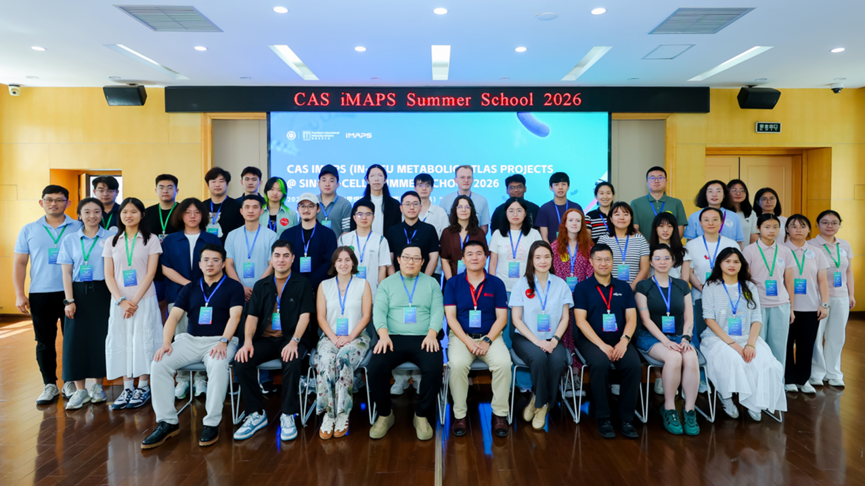
It brought together 27 early-career researchers from 21 universities and research institutions across 11 countries and regions to explore applications of ramanomics in microbiome research, agriculture, biomanufacturing, food safety and biomedicine.
The program opened on July 12 at the Qingdao Institute of Bioenergy and Bioprocess Technology (QIBEBT), Chinese Academy of Sciences (CAS), where Prof. XU Jian, Prof. Rob Knight, director of the Center for Microbiome Innovation at the University of California San Diego, and Dr. Emma Rocke of the University of Cape Town addressed the participants.
As the co-chairs of the World Microbiome Partnership's Working Group on Environmental Microbiomes and Climate Change (WG-F), they highlighted the shift in microbiome research from identifying microbial species to resolving their functions, and discussed the role of the in-situ Metabolic Atlas Projects @ Single-cell (iMAPS) in building an open, distributed and sustainable global research network.
In Qingdao, participants attended lectures and received hands-on training with core iMAPS instruments, including FlowRACS, RAMS and DCP, at QIBEBT and Qingdao Single-Cell Biotech. Co., Ltd. They also learned to analyze ramanome data using RamEx and the RamanAI cloud platform.
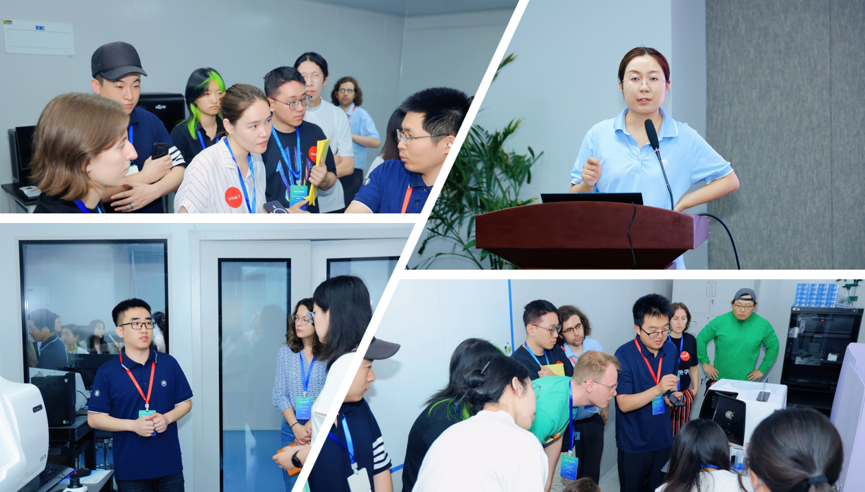
The program then moved to Beijing and Xiong’an. At the Academy of National Food and Strategic Reserves Administration, participants visited an operational iMAPS node and explored applications of ramanomics in grain quality, food safety and rapid microbial monitoring. At the Xiong’an Institute of Innovation, CAS, they explored AI-enabled soil detection, the development and demonstration of Fuxi Farm, and Raman-activated cell sorting for breeding yeast strains for alternative protein production. The first iMAPS Young Scientists Forum focused on agriculture, environmental science and biomanufacturing, with Andrea Rico Montaña of Imperial College London receiving the Best Presentation Award.
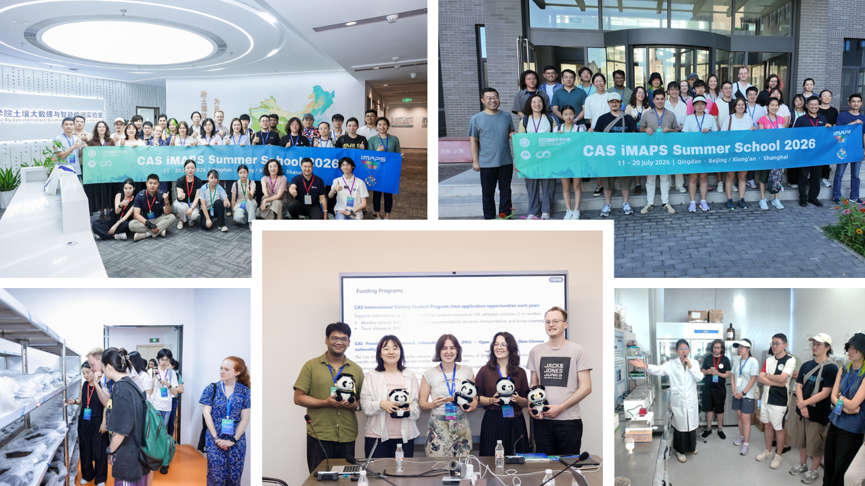
The final stage in Shanghai focused on biomedicine and human microbiome. At the Shanghai Institute of Materia Medica, CAS (SIMM), participants visited the iMAPS, mass spectrometry, and MOST platforms, gaining insight into how ramanomics can support drug discovery, quality assessment and biomedical research. The second iMAPS Young Scientists Forum was also held in Shanghai, where Chen-Xi Li of the University of Hong Kong received the Best Presentation Award.
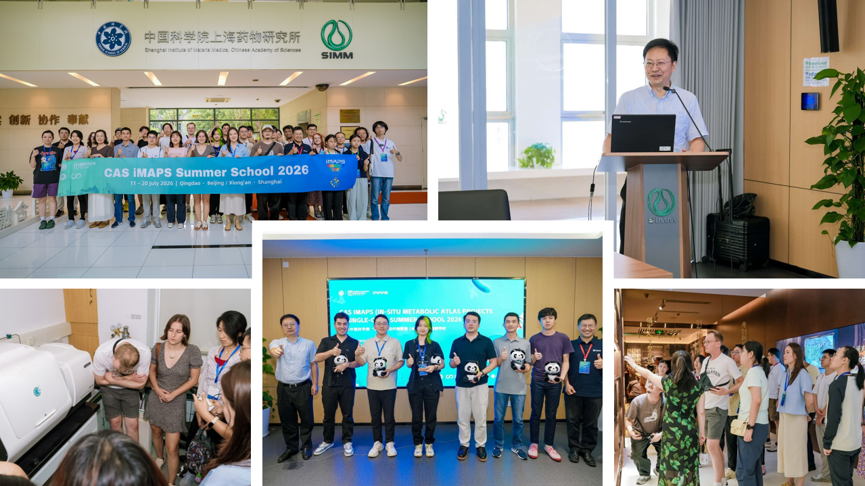
At the closing ceremony, Prof. ZHANG Xiaoming, deputy director of SIMM, praised the participants for their scientific enthusiasm, intellectual curiosity and innovative thinking. He presented awards to the outstanding speakers from Young Scientists Forum and certificates of completion to all participants, formally marking the conclusion of the program.
In a joint message, Prof. XU Jian, Prof. Rob Knight and Dr. Emma Rocke commended the participants’ enthusiasm and creativity. They described the journey from Qingdao, the birthplace of ramanomics, to application-oriented iMAPS platforms in Beijing/Xiong’an and Shanghai as a preview of how ramanomics can support biomanufacturing, agriculture/environment, and biomedicine. They encouraged participants to turn the connections established during the program into new collaborations and discoveries.
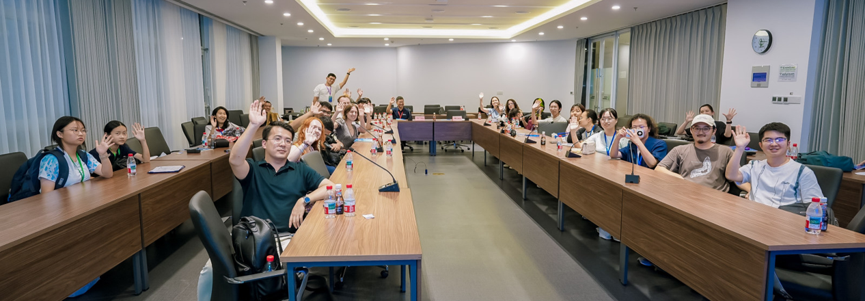
The summer school marked an important step in expanding the global iMAPS network, in which each node builds a Microbiome Metabolic Observatory. The summer school is planned to be held annually at iMAPS nodes worldwide. The program was jointly organized by QIBEBT and partner institutions, with support from the CAS President’s International Fellowship Initiative (PIFI) and QIBEBT’s Division of Advanced Biomanufacturing, and was part of the Green Carbon Program under the UNESCO International Decade of Sciences for Sustainable Development.
